Unnatural Disasters: The Human and Political Toll of South Asia’s Flood Crisis
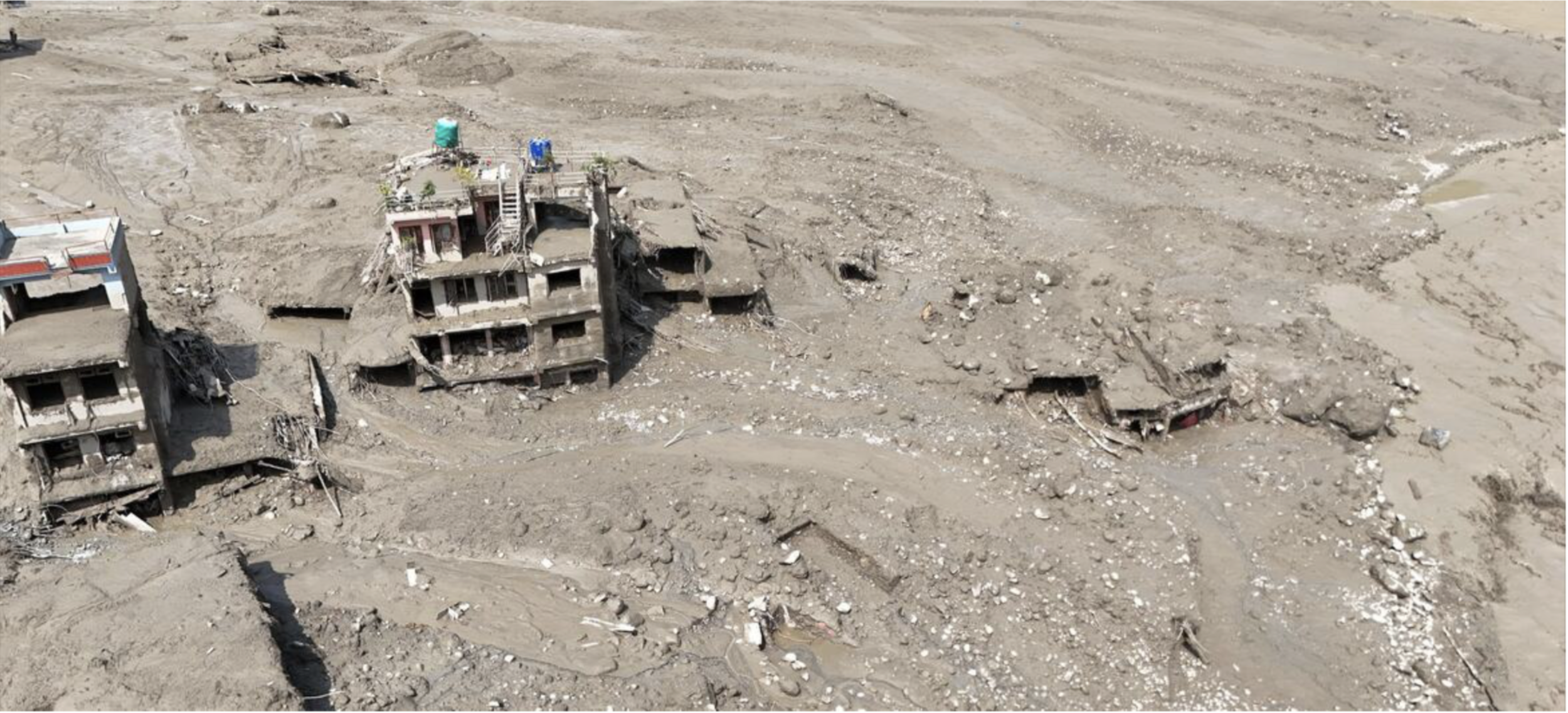
Aerial view of flood devastation and structural damage in Rasuwa, Nepal. Photo Credit: UNICEF
As students across Chapel Hill adjust to a new academic year, millions across South Asia are navigating an existential reality. Torrential downpours, severe riverbank breaches, and sudden flash flooding have devastated communities across the region, sweeping away homes, destroying infrastructure, and displacing thousands of families.
In Nepal, the catastrophe reached a breaking point following a massive rock and ice collapse near the Himalayan border. The resulting incident sent fast-moving, debris-filled floodwaters surging over 100 kilometers down the Trishuli and Bhote Koshi river systems. Entire towns in districts such as Rasuwa, Nuwakot, and Dhading were submerged in mud, while highways, hydroelectric projects, and transit checkpoints were completely destroyed.
On campus, Nepali students at UNC have been processing these updates with deep shock and grief. Many spent the opening weeks of the semester frantically contacting loved ones back home, monitoring news of disrupted supply lines, and learning of the devastation across rural mountain valleys. Most students are eager to provide support, but are heartbroken by the scale of loss facing their country.
UNC’s Nepalese Student Association (NSA) has organized fundraisers such as “Chai and Cookies” and “Pops for Nepal,” the proceeds of which will be donated to Nepal flood relief efforts. Rayna Poudyal, who serves as NSA’s Vice President for the 26-27 school year, said that these events were planned based off of a Fundraiser Night from 2024 that collected donations for the rampant flash floods in Nepal that year. As they did for this previous event, NSA shared a post on their Instagram that articulates the recent disaster based on thorough research, as well as some organizations that people can donate to.
Beyond "Seasonal Weather": A Climate Injustice
Western mainstream media often dismisses these disasters as "seasonal monsoon weather." This framing ignores a critical truth: Nepal contributes a negligible fraction to global greenhouse gas emissions, yet it faces the brunt of global climate collapse as rising temperatures melt Himalayan glaciers.
Framing these events as routine weather ignores the relentless, heroic local efforts on the ground in Nepal. Local responders, grassroots organizations, and community members are actively rescuing neighbors and navigating the severe aftermath of these storms despite limited resources.
Meanwhile, the Western world, historically and currently responsible for the vast majority of fossil fuel consumption, industrial waste, and energy output, remains protected from the immediate consequences of the crisis it fuels.
At Monsoon, our mission is to examine how issues facing our homeland intersect with global power dynamics and environmental justice. The flooding across Nepal, Bangladesh, and Pakistan is a reminder that Global North emissions export severe human and economic costs directly to the Global South.
How You Can Support Right Now
Rescue operations are actively underway in Nepal, but families have lost their homes, livelihoods, and essential infrastructure.
The most impactful way UNC students can support Nepal right now is by donating to flood relief and assistance programs. Even a single dollar goes a long way toward supporting emergency rescue efforts, providing basic shelter, and supplying clean water to affected families.
Donate Directly: Direct your mutual aid contributions toward verified local relief funds and grassroots assistance programs in Nepal through the Nepal Red Cross Society or the IFRC Nepal Emergency Appeal.
Amplify Local Voices: Share updates that center local rescue efforts and highlight the structural climate inequities causing these extreme floods by tracking real-time data via Nepal's youth-led BIPAD Portal.
Check out UNC NSA’s Instagram: NSA shared a post providing information on the disaster and shared a link in their bio that lists organizations that are taking donations. They will also be hosting more fundraising events throughout the year, which will be advertised on Instagram.
Stay Engaged with Monsoon: Join us as we continue holding space for South Asian advocacy, environmental justice, and community solidarity on campus.